Sunderland AFC was founded in 1879 by schoolmaster James Allan under the name Sunderland and District Teachers Association Football Club.
Originally, membership of the club was restricted to school teachers only. However, as football rapidly grew in popularity across the North East, Sunderland soon opened its doors to players from outside the teaching profession. This proved to be a crucial step in the club’s early development.
In 1880, the club shortened its name to Sunderland AFC, marking the beginning of a new chapter.
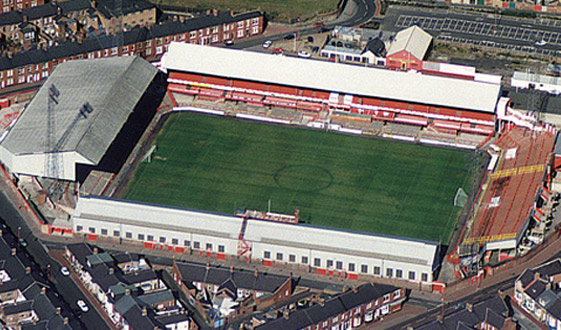
Throughout the 1880s, Sunderland established itself as one of the strongest clubs in the region, regularly attracting large crowds and building a growing reputation. The club played at several early grounds before settling at Newcastle Road, which became Sunderland’s home during a period of major success. In 1898, Sunderland moved to Roker Park, a stadium that would become one of the most iconic homes in English football and remained central to the club’s identity for nearly a century.
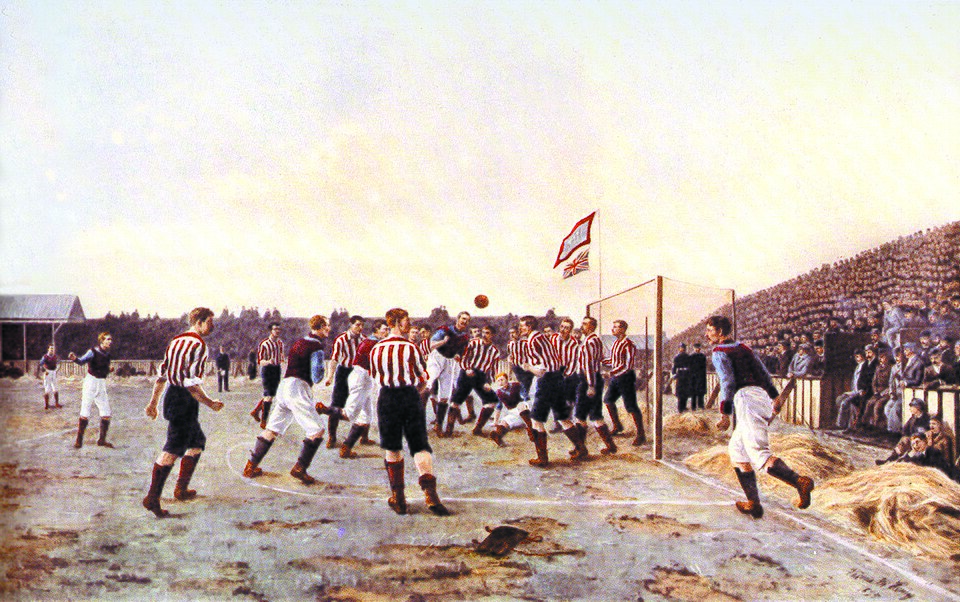
Newcastle Road was depicted in one of the earliest English football paintings: Sunderland v. Aston Villa 1895 by Thomas M. M. Hemy. The painting proudly hangs in the entrance at the Stadium of Light.
Sunderland embraced professionalism in 1887, allowing the club to compete with the strongest teams in England. This decision transformed Sunderland into a major force in English football.
In 1888, founder James Allan left Sunderland after disagreements over professionalism and formed rival club Sunderland Albion. Although Albion later folded, the split marked a significant moment in Sunderland’s early development.
The club joined The Football League in 1890, and success came almost immediately.
Under Scottish manager Tom Watson, Sunderland became one of the dominant teams of the 1890s. Their attractive passing football, physical strength and tactical organisation earned them admiration across the country.
Between 1892 and 1900, Sunderland won the First Division title five times:
🏆 1891–92 🏆 1892–93 🏆 1894–95 🏆 1897–98 🏆 1901–02 (just beyond this era, but part of the same dominant period)
Their dominance earned Sunderland the nickname:
“The Team of All Talents”
Sunderland also became known as “The Bank of England Club” due to their ability to attract and assemble some of the finest players in the country.
This Sunderland side became widely regarded as one of the finest football teams in England.
One of the most famous moments of this era came in 1895, when Sunderland defeated Scottish champions Heart of Midlothian F.C. to be recognised as World Champions in an unofficial championship match — a source of immense pride for the club and city.
By the turn of the century, Sunderland had grown from a small teachers’ football club into one of the biggest and most successful clubs in English football.
The foundations of Sunderland’s proud footballing tradition had been firmly built.
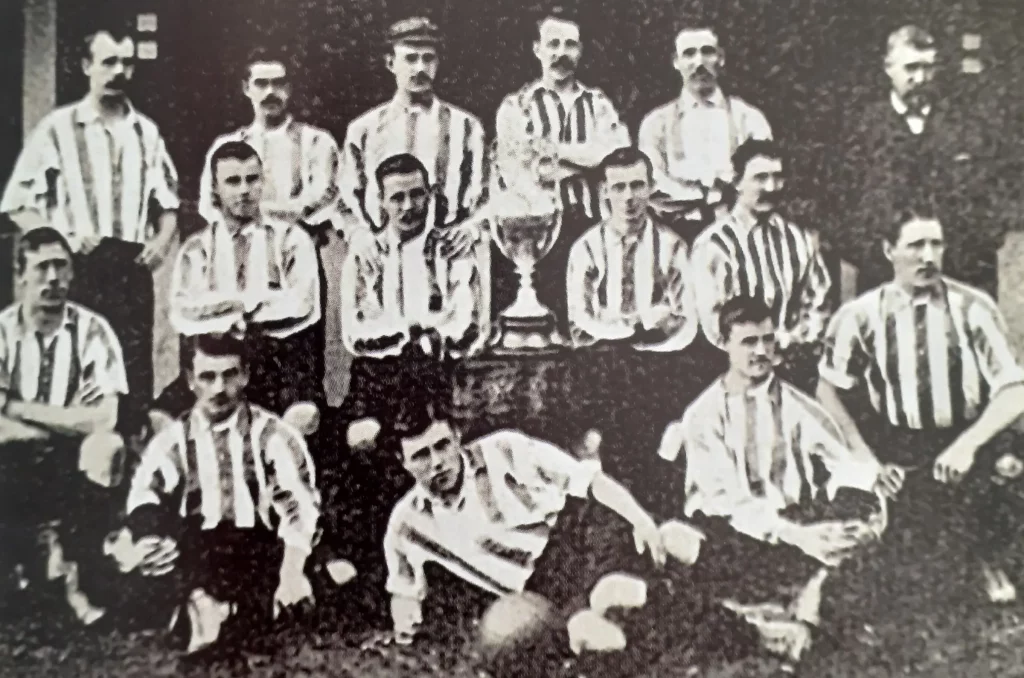
Sunderland show off their first Football League championship trophy. Image from Sunderland AFC The Official History
2. The Glory Years (1900-1939)
During the early 20th century, Sunderland strengthened its reputation as one of the giants of English football.
The club continued to build on the success of the late 1890s and entered the new century as one of the most respected teams in the country.
Sunderland won the First Division title again in:
🏆 1901–02 🏆 1912–13 🏆 1935–36
The 1912–13 title-winning side became one of the finest in Sunderland’s history, showcasing strength, discipline and attacking quality.
Sunderland’s greatest achievement of this era came in 1937 when the club won its first FA Cup.
At Wembley, Sunderland defeated Preston North End 3–1 in front of a huge crowd, securing one of the most famous victories in club history.
The goals came from:
⚽ Raich Carter ⚽ Bobby Gurney ⚽ Eddie Burbanks
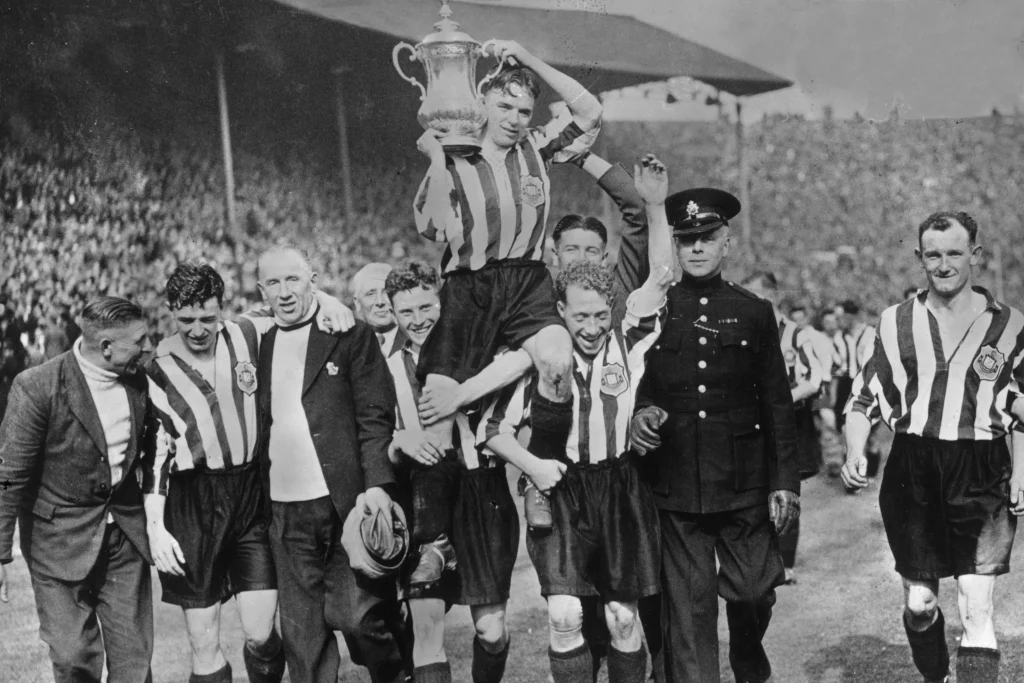
Captain Raich Carter lifted the FA Cup, creating one of the most iconic moments in Sunderland AFC history.
By the outbreak of World War II in 1939, Sunderland had firmly established itself among England’s elite clubs.
Photo by Topical Press Agency/Getty Images
3. Post-War Years (1945-1972)
After World War II, Sunderland returned to football as one of England’s biggest clubs, backed by strong financial power and huge support from Wearside.
The club became famous in the late 1940s and early 1950s as “The Bank of England Club”, due to the large transfer fees paid to bring top players to Roker Park.
Sunderland invested heavily in talent, signing some of the best players in Britain and aiming to challenge for major honours once again.
Despite building strong squads, league titles proved difficult to secure in the increasingly competitive post-war era.
One of the most significant moments of this period came in 1950 when Sunderland signed Welsh striker Trevor Ford for a British record transfer fee.
Ford became one of the standout players of the era and symbolised Sunderland’s ambition.
Roker Park remained one of English football’s most iconic stadiums, regularly attracting huge crowds and generating a famous atmosphere.
However, despite high expectations, Sunderland were unable to convert spending power into sustained trophy success.
A major turning point came in 1957 when Sunderland were fined by the Football Association for breaking player wage regulations.
The scandal damaged the club’s reputation and marked the end of an important era.
Only a year later, in 1958, Sunderland suffered one of the biggest shocks in club history.
After 68 consecutive seasons in the top flight, Sunderland were relegated from the First Division for the first time.
The relegation marked the end of Sunderland’s long-standing place among English football’s elite.
Throughout the 1960s, Sunderland fought to rebuild and regain former glory.
The club remained one of the biggest supported sides in the country, with loyal fans continuing to pack Roker Park.
A brighter moment arrived in 1972 when Sunderland reached the FA Cup Final under manager Bob Stokoe.
The team earned promotion to the First Division that same year, giving supporters renewed hope for the future.
The stage was now set for one of the greatest moments in Sunderland AFC history.
Key moments list:
⚽ British record signing: Trevor Ford (1950) 📉 Relegated from First Division (1958) 👔 Bob Stokoe appointed manager 🏟️ Roker Park remains fortress of Wearside football
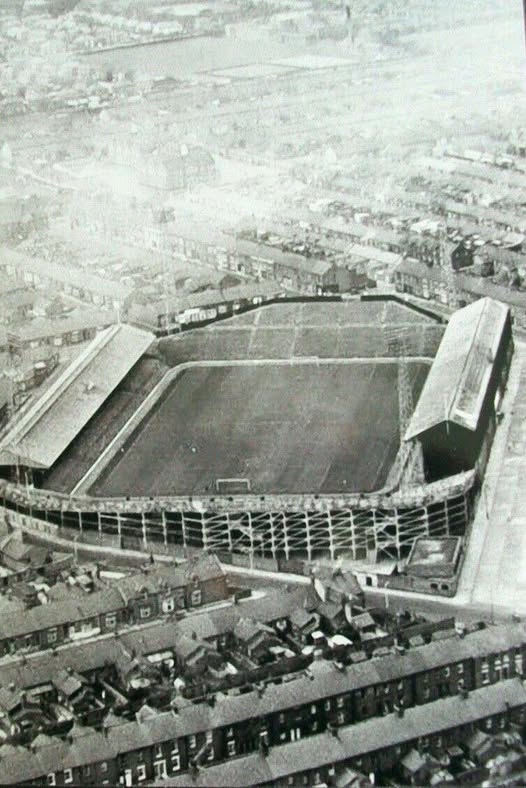
Roker Park in the 1950s. Picture courtesy of Sunderland History Facebook page.
4. FA Cup Glory and Modern Era (1973–Present)
The defining moment of Sunderland AFC’s modern history came in 1973 when the club achieved one of the greatest upsets in English football.
Managed by legendary boss Bob Stokoe, Sunderland entered the FA Cup Final as Second Division underdogs against the mighty Leeds United F.C., one of the strongest teams in Europe at the time.
Few gave Sunderland any chance
But on 5 May 1973, Sunderland produced a performance that would live forever in football history.
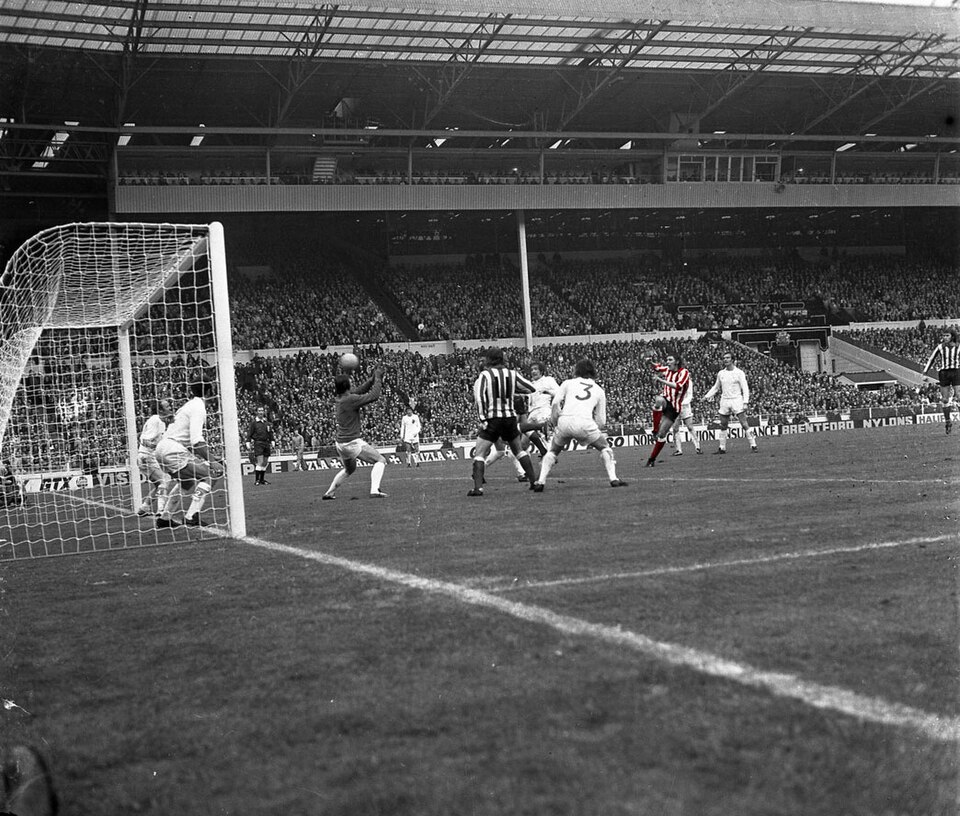
In front of a packed Wembley Stadium, Sunderland shocked the football world with a famous 1–0 victory.
The winning goal came from Ian Porterfield, whose first-half strike became one of the most iconic goals in FA Cup history.
Sunderland’s victory was preserved by one of the greatest saves ever seen in a cup final.
Goalkeeper Jim Montgomery produced a remarkable double save to deny Leeds and keep Sunderland in front.
At full-time, scenes of incredible celebration followed as captain Bobby Kerr lifted the FA Cup.
The image of Bob Stokoe running across the Wembley pitch to embrace Jim Montgomery became one of the most iconic moments in English football.
The 1973 FA Cup triumph remains Sunderland AFC’s last major trophy and one of the proudest moments in the club’s history.
Ian Porterfield scores the winning goal in the 1973 FA Cup Final. Photograph courtesy of the Sunderland Echo.
5. Post-1973 Years
In the decades that followed, Sunderland experienced both highs and lows.
The club moved between divisions, battling through promotions, relegations, and financial challenges.
Despite difficult periods, support from Sunderland fans remained among the strongest in English football.
In 1997, Sunderland said farewell to Roker Park after nearly a century.
Roker Park – The home of Sunderland AFC from 1898 to 1997
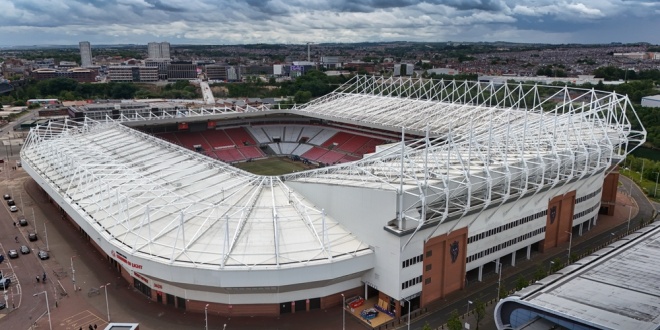
The club moved to the modern Stadium of Light, which became the new home of the Black Cats.
Stadium of Light, home of Premier League club Sunderland AFC – Credit: Mark D Whalen / Shutterstock
The move marked the beginning of a new era.
Under manager Peter Reid, Sunderland enjoyed one of its strongest Premier League periods in the late 1990s and early 2000s.
The club earned promotion to the Premier League and became known for exciting football and passionate support.
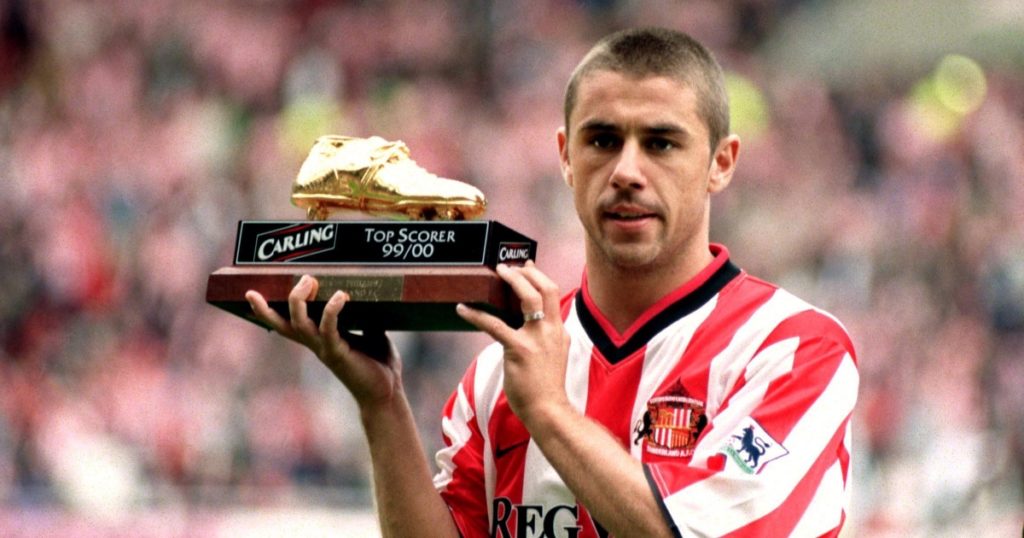
Players such as Kevin Phillips became club legends during this era.
In 1999–2000, Phillips won the European Golden Shoe after scoring 30 Premier League goals — a remarkable achievement.
Kevin Phillips with his European Golden Shoe.
6. Recent Years
Sunderland have faced major challenges in recent years, including relegation from the Premier League in 2017 and a difficult spell in the lower divisions.
However, the club’s spirit has never faded.
Supporters continued to back the team in huge numbers, showing the passion and loyalty that define Wearside.
In 2022, Sunderland secured promotion back to the Championship beating Wycombe Wanderers in the League One Play Off Final at Wembley winning 2-0 bringing renewed optimism to the club and its supporters.
In 2025, Sunderland finally returned to the top flight, this time beating Sheffield United 2-1 in the Championship Play-Off Final.
European Qualification
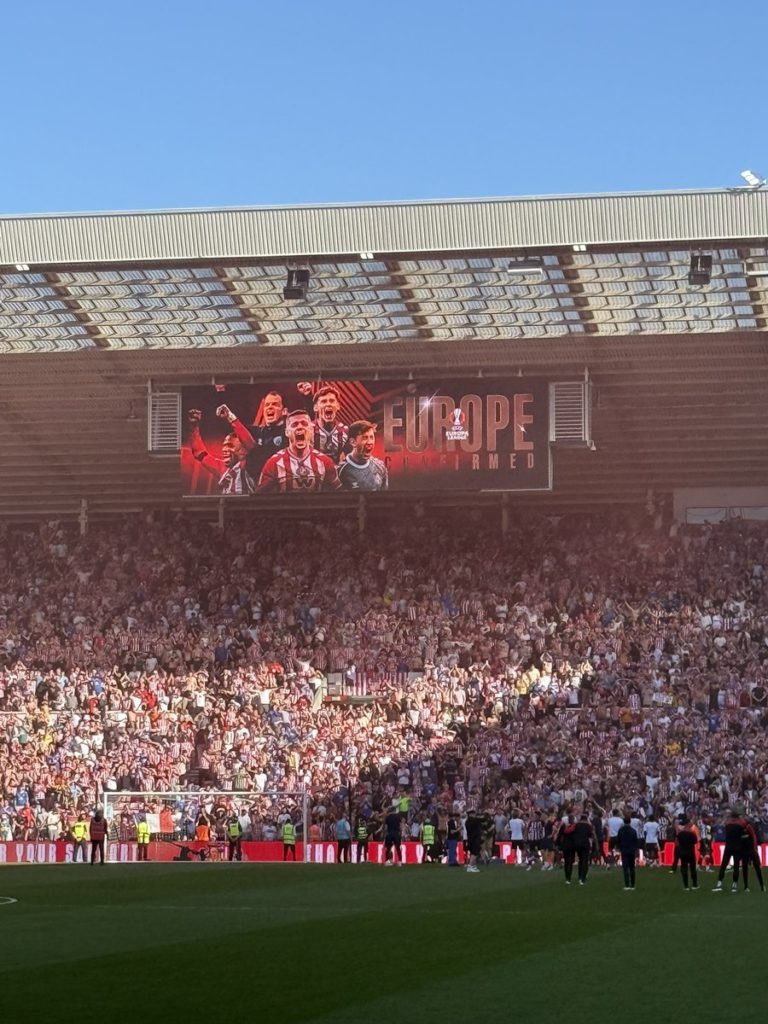
Their first season back in the Premier League (season25-26) was magnificent finishing 7th and qualifying for the Europa League. Bringing European football back to Wearside for the first time in over 50 years.
Through triumph, heartbreak, and unforgettable memories, the club remains at the heart of Wearside.
The story of Sunderland AFC continues to be written.
Sunderland AFC qualify for the Europa League after beating Chelsea at home on the final day of the season and the celebrations begin. Pictures courtesy of Getty Images.